Will appear on Seller pages – RECENT SELLER ARTICLES

How Supply Chain Issues are Complicating M&A Dealmaking

Many businesses are struggling with supply chain issues right now. After vaccine programs and government stimulus monies kicked in and economies roared back to life this past year, global supply chains came under immense strain as weaknesses were exposed. Though conditions have improved slightly in just the past few months, experts in most industries are forecasting that supply chain troubles will persist well into 2023.

This article discusses some of the ways that supply chain problems are complicating M&A transactions for business owners looking to sell in 2022.

Earnings Performance

One of our M&A clients, a durable goods distribution company, currently has a record order backlog of 11 months, as customers place large orders to combat long lead times. Normal backlog before COVID was around 1-2 months. Lead times on popular SKUs that were once 2-3 weeks are now 5-6 months, and scheduled deliveries on some products are a full year out! Meanwhile many vendors are missing promised delivery dates, and the order backlog keeps climbing, for now. Sales (shipments) are totally dependent on the supply chain.

EBITDA is the most talked about, relied upon, and argued over earnings metric in the world of mergers and acquisitions. When a business has solid orders but is struggling to ship products, it becomes difficult to establish an earnings run rate and to forecast earnings. That in turn makes it difficult for acquirers and sellers to see eye to eye on EBITDA and therefore enterprise valuation. And how well correlated is trailing twelve-month (TTM) performance with expected future performance anyway under these conditions? Often not well at all.

And this is part of a broader question―where will growth stabilize after COVID restrictions and government stimulus ends, and inflation and GDP growth are back to normal? Since different buyers will have different views of TTM and expected future EBITDA performance (not to mention working capital and capital spending needs) the best way for sellers to optimize value in today’s market is to run a structured sale process where multiple buyers come to the table.

Supplier Due Diligence

As acquirers seek greater supply chain resilience, we’re seeing them do more due diligence in this area than ever before. In the past, buyers were relatively relaxed about supply vulnerabilities, focusing more in other areas. But now we’re seeing more scrutiny of supplier quality and on time performance, length of supplier relationships, supplier concentration, location of supplier operations, supplier commitment to the target, capacity for growth, strategic plans, recent or potential change of ownership, contracts, proprietary content, history of price increases, long lead time items, economic order quantities, sole sourced items and alternative sources of supply, and other potential areas of risk.

We brought an electronics business to market recently that had backups or workarounds for nearly every component in their products. Frankly, we’d never seen a company put so much time and energy into supplier redundancies. Yet, they had one essential PCB with no alternate supplier.

Buyer concern was so significant, we took the business off the market until a reliable second source was identified and qualified.

Working Capital

Another aspect of M&A dealmaking that is being complicated by supply chain issues has to do with working capital negotiations. Working capital is like gas in a car – you need it to run a business. When selling a business, the buyer and seller agree on a “sufficient” amount of working capital (usually on a cash-free debt-free basis) to be left in the business to support ongoing operations. In a typical economy, unless a business is growing or declining rapidly, this “target” working capital level is based on a TTM average calculation.

But right now, many businesses are holding onto bloated levels of inventory to compensate for parts shortages and long lead times. Manufacturers that used to buy inventory on a just-in-time basis are now overstocking. Not only are inventories much higher than normal, but in many cases the price-per-unit has skyrocketed as well. Companies are paying whatever they have to in order to keep critical parts in stock and keep customers happy. The same goes for shipping costs.

So, businesses selling now based on a TTM average working capital target will be including more working capital than if they had sold 12 or 24 months ago. This is one of the areas that can really upset sellers – no one likes to leave money on the table. Fortunately, with all the competition in the market today, many buyers are willing to throw out the book on working capital to win the deal. The key is to negotiate the target earlier in the process when there are still multiple buyers at the table. In the past we often negotiated the working capital target during due diligence. Today we almost always negotiate it in the LOI.

What to do

Owners looking to sell in a world reshaped by the pandemic should select an M&A advisor who anticipates issues like these and has strategies for addressing them. Owners planning to remain independent may want to consider protecting their supply chain by vertically integrating upstream through a strategic acquisition.


For advice on exit planning or selling a business, contact Al Statz, CEO of Exit Strategies Group, Inc., at alstatz@exitstrategiesgroup.comExit Strategies Group is a partner in the Cornerstone International Alliance.

M&A Advisor Tip: Perks & business value

Business owners take a number of perks from their business, from the standards like auto expenses, memberships, and insurance plans to extras like entertainment, vacations, or an additional family member on the books.

Perks are a way for owners to be further compensated for their hard work. However, they can complicate valuing a business. When preparing your business for sale, your advisors will “normalize” your financials to account for these extras.

Be aware of providing products or services for cash – or perks that can’t be adequately tracked and proven in your books – can diminish the value of your business. When planning to sell, talk to your advisor about the tax benefits / value tradeoff of certain perks and consider where it would be better to drive cash to the bottom line.


For advice on exit planning or selling a business, contact Al Statz, CEO of Exit Strategies Group, Inc., at alstatz@exitstrategiesgroup.comExit Strategies Group is a partner in the Cornerstone International Alliance.

Creative deal structures and deal terms move to lower middle market

When selling your business, price is not the only important factor you’ll negotiate with a buyer. The deal structure includes a wide range of considerations from transaction type, ownership and payment structures, working capital, assurances, timelines, and more.

What we’re seeing in the market right now is a rise in creative deal structures. These are non-typical solutions that help dealmakers bridge some sort of gap between the buyer and seller. If properly negotiated, these structures can make a lot of sense for both sides, but it’s critical for a seller to have an experienced M&A advisor and transaction attorney on their side to ensure they understand these more complex provisions.

An earnout is, perhaps, the classic example of a creative deal structure. Under these agreements, the seller receives additional payments provided the business hits certain targets down the road. Earnouts can be a great way to bridge valuation gaps, such as when the business is expecting a big performance boost in the near future – and the seller wants to be paid for those as-yet-unrealized gains.

Some creative deal structures are more common in the middle market M&A (transactions with values over $50 million). But as private equity buyers continue to shift into the lower middle market (business values of $2 million to $50 million), they’re bringing deal structures like these with them:

Reps and warranties insurance. When selling your business, typically you’re going to “represent and warrant” certain things about the business (e.g., you’ve provided accurate info, no known legal or customer issues pending). If something turns out to be not wholly accurate, the buyer can come back to you for a certain percentage of the purchase price.

In smaller deals, the seller will simply agree to a guarantee. But as transactions get larger, buyers may ask sellers to put that money in escrow. That money is then tied up for a certain period of time, not earning any returns.

As an alternative to escrow, the deal can include reps and warranties insurance. In this case, the insurance company does their own due diligence and agrees to take on that risk. The advantage for sellers is that they don’t have to hold that money in escrow anymore and shed the risk of covering a reps and warranty claim during the warranty period.

Premiums for reps and warranties insurance often start at around $250,000. Because of the cost and additional diligence required by the insurer, it was only common in larger transactions over $50 million. Now we’re seeing that move down into deals as small as $10 million in enterprise value.

In some cases, buyers are using reps and warranties insurance as a tool to win the deal. If competition is strong (and these days it often is), buyers may offer to pay for reps and warranties insurance. As sellers evaluate multiple offers, they might consider the opportunity to bypass escrow as a factor that tips them in a buyer’s favor.

338(h)(10). In these transactions, the deal is treated as a stock sale from a legal standpoint but as an asset sale from a tax standpoint. From a legal standpoint, this structure can eliminate the need to comply with time consuming and sometimes challenging customer contract “change in control provisions.” For the buyer, that means they can get a step-up in basis and re-depreciate the assets they just acquired.

F reorganization. An F-reorg is a tax efficient method to allow the seller to rollover equity into the new business (i.e. retain a small portion of the business ownership) without paying taxes on the rollover amount.

Without using an F-reorg, for example, the seller might sell 100% of the company and get taxed on that full amount before reinvesting some of their proceeds in the buyer’s new entity.

Deal makers predict an increase in these and other creative deal structures in the year ahead. The pandemic is one factor behind that. Businesses saw their operations disrupted, and that has created some business opportunities and some risks. Alternative deal structures are one way for buyers to mitigate valuation gaps, reduce seller’s taxes, and create win-win agreements between buyers and sellers.

Deal competition and private equity activity are also driving creative structures. According to a Mergermarket survey, private equity respondents indicated they were more likely to consider creative deal structures than corporate dealmakers (75% to 37%).

That may be because private equity firms simply have more experience with these structures. Or it could be that they have a stronger imperative to win deals, and creative structures provide more flexibility to do that. Regardless of the reason, by utilizing an experienced M&A advisor sellers have an opportunity to embrace these more complex deal terms leading to increased enhanced upside.


For advice on exit planning or selling a business, contact Al Statz, CEO of Exit Strategies Group, Inc., at alstatz@exitstrategiesgroup.com. Exit Strategies Group is a partner in the Cornerstone International Alliance.

Market Pulse Survey – Quarter 3, 2021

Presented by IBBA & M&A Source


For advice on exit planning or selling a business, contact Al Statz, CEO of Exit Strategies Group, Inc., at alstatz@exitstrategiesgroup.comExit Strategies Group is a partner in the Cornerstone International Alliance.


M&A Advisor Tip: Value = Risk vs. Reward

Buyers value your business based on risk (real or perceived) and future cash flow. Consider potential business risks. What could prevent your company from realizing your forecasted earnings? Think talent, customers, suppliers, competition, cash flow.

Strategize ways to reduce risk in each area, e.g. cross training, outsourcing, succession planning, customer diversification, backup suppliers, etc. The more you do to take away potential pain points, the more attractive your business will be.


For advice on exit planning or selling a business, contact Al Statz, CEO of Exit Strategies Group, Inc., at alstatz@exitstrategiesgroup.comExit Strategies Group is a partner in the Cornerstone International Alliance.

Exit Strategies Group Announces Successful Sale of AAP Automation

(Englewood, CO) Exit Strategies Group, Inc. is pleased to announce that it recently served as exclusive M&A advisor to the shareholders of AAP Automation on their successful sale to Ohio Transmission Corporation (OTC), a portfolio company of Genstar Capital. OTC is one of the largest industrial distributors and service providers in the United States. AAP Automation will operate under OTC’s Industrial Products Group segment. Financial terms of the transaction were not disclosed.

Founded in 1982 by C Hutton Smith and Robert Noyes, AAP Automation, Inc. is a leading value-added distributor of world-class industrial automation products and provider of custom engineered solutions. Technologies include motion control, sensors, pneumatic valves and actuators, vacuum, air prep, machine framing, safety and robotics. AAP is an authorized distributor for over 50 manufacturers, including many industry leaders.  AAP has three sales offices and two field service locations in Arizona, Colorado and Utah and has 55 employees. AAP’s footprint also reaches into Idaho, Wyoming, and New Mexico.

The Ohio Transmission Corporation Family of Companies has 1,400 associates serving 45 states from over 50 locations. They are a leading technical distributor of highly engineered motion control, pump, finishing, and air compressor products. OTC serves over 15,000 customers across diverse end-markets by developing technical and consultative sales, repair and aftermarket capabilities.

“Exit Strategies Group is delighted to have advised the shareholders of AAP Automation in a structured sale process. We received several strong offers for AAP and OTC prevailed with the best combination of financial terms and strategic and cultural fit,” said Al Statz, President of Exit Strategies Group. “This deal illustrates Exit Strategies’ continued commitment to providing strategic valuation and M&A advisory services to founder and operator owned industrial automation technology companies.”

Exit Strategies Group (ESG) is a California-based provider of strategic merger and acquisition advice/execution and business valuation services. Founded in 2002, with offices in San Francisco and Portland, ESG represents private companies on the sell-side and works with private equity, public and private companies and family offices on the buy-side. Its industry expertise spans all areas of industrial automation products and services and advanced manufacturing. Since inception, ESG has advised on well over 100 M&A transactions. For more information visit www.exitstrategiesgroup.com.

When selling your business is your succession plan

How old are your key employees? This is becoming one of the key issues buyers care about when acquiring a business. It’s not a case of agism – buyers would love for your senior employees to stay. It’s about risk and how soon the business’s pivotal people are going to retire.

Right now, 10,000 Baby Boomers turn 65 each day. In 2020, 3.2 million Boomers left the workforce, and this trend is likely to continue. A survey from the New York Federal Reserve suggests nearly half of Americans are likely to retire before 62. The labor force is aging-out, and analysts predict this “demographic drought” is only going to get worse.

When business owners want to retire, they can no longer count on the buyer to find their replacement. If selling the business is your entire exit plan and succession strategy wrapped in one, you could be risking its value. Many buyers want your next wave of leadership tee’d up and ready to go. Because buyers know they may not be able to find those people on their own.

For example, we were recently working with a machine shop in which the business owner and one engineer were the only people handling sales and estimating. The owner was already halfway out the door, and the engineer planned to stay for only about another year.

They do specialized, one-off and low production run jobs, which means estimating is not something that can be readily standardized. Without either of these two people, sales cannot happen. That’s a critical risk, and it’s not something every buyer is willing to take on.

Here’s a bigger example: Wipfli recently conducted a survey of business owners in the construction industry and found that nearly 90% plan to transition ownership in the next 10 years, and half expect to transition in the next five.

This is an industry facing critical talent shortages. According to the National Center for Construction Education & Research, a third of the construction workforce will retire by 2026. That means a shortage on the jobsite and in the C-suite. Those business owners need to start shoring up their succession plans now if they want to retain business value.

There are a large number of family-owned and privately held businesses out there with owners approaching retirement age, and no one ready to take over. The M&A market is booming, but those leadership gaps are keeping some business owners from maximizing their value or even being able to sell their company during these great times.

Now more than ever, leadership and succession planning can protect your business value. However, if you simply don’t have the energy or expertise to add that to your to-do list, there is another option that can help get your business sold at top value: a multi-year transition period.

There are all kinds of ways to structure a deal for owners who intend to stay on – consulting or employment contracts, equity positions, performance incentives. It can be a great way to alleviate the pressures of ownership while taking advantage of growth opportunities using your new partner’s resources.

Buyers want to see a strong management team in place. If you don’t have that, an extended transition gives the buyer assurances that the business can continue to operate as-is for a set period of time. It also gives them a long-lead time to find and cultivate new leadership.

If you’re thinking about exiting in the next five years, talk to your advisors about ramping up your succession plans. As part of those conversations, consult with an M&A advisor and find out all your options for exit – including ways to incentivize key employees with equity positions and how to protect value when you don’t have a successor in place.


For advice on exit planning or selling a business, contact Al Statz, CEO of Exit Strategies Group, Inc., at alstatz@exitstrategiesgroup.comExit Strategies Group is a partner in the Cornerstone International Alliance.

M&A Advisor Tip: The Case of the Missing Successor

Businesses are facing talent shortages at all levels – at the front lines and in the C-suite. In some industries, like construction, talent issues can complicate exit plans. At some point, there may not be enough leaders left to take over for all the owners who want to exit.

Now more than ever, succession planning can protect your business value. Buyers are looking for companies with a strong management team ready to lead.

If you’re thinking about exiting in the next five years, talk to us about your options – including ways to incentivize key employees and how to protect value when you don’t have a successor in place.


For advice on exit planning or selling a business, contact Al Statz, CEO of Exit Strategies Group, Inc., at alstatz@exitstrategiesgroup.comExit Strategies Group is a partner in the Cornerstone International Alliance.

How 100 minus 90 equals 20

Here’s a story of how 100 – 90 = 20. We recently represented some owners who had lots of options when it came to selling their business. They had a high demand manufacturing operation, and buyers wanted in – offering everything from minority or majority investments to full exit options.

At first, the sellers thought they wanted a full exit, all cash at close. If they were going to give up control, they figured it was best to cash out. But as they continued to talk with potential buyers and partners, they began to consider a majority recapitalization.

In a majority recap, the owners sell a majority interest to investors who provide a cash infusion. The sellers maintain a meaningful minority stake in the business and, typically, continue to manage the “recapitalized” operation.

In this transaction, the sellers got 90% of company value as cash at close, rolling over just 10% of their proceeds into the new company. But because of the debt structure on the new entity, that 10% actually translated into a 20% ownership stake.

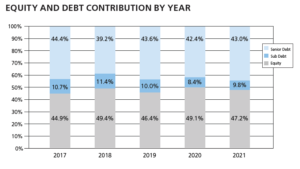
A typical model for investment buyers like private equity firms or family offices is to put roughly 50% debt on the new company. This allows them to leverage their equity and generate a better return. Through that debt arrangement, the value of the sellers’ rollover essentially doubled to 20%.

Majority recaps are a way for an owner to diversify their net worth while also getting a strong financial partner who will help grow the business. Typically, these transactions are structured so that the seller (aka the new minority owner) holds no personal guarantees on the debt.

So worst case scenario, if the company goes totally south, they’d only lose that 10%. No one could go after the 90% they already took out of the business. It’s like the seller gets to take their chips off the table and play with the “casino’s money”.

Value today

Business valuations are strong today. Market conditions are such that there are a lot of well-funded buyers out there looking for opportunities. We’re in a seller’s market and people are seeing values trending at or above previous benchmarks in their industry.

What that means is that the 90% cash at close our sellers took in this deal was probably worth as much or more than a 100% sale would have been worth a few years ago.

Value tomorrow

As we say in M&A, majority recaps provide the seller with a “second bite of the apple.” That second bite typically occurs four to seven years after the initial recap.

After a period of investment and growth, the majority and minority owners agree to liquidate value (i.e., “re-sell” the business). If performance has been good, the owner’s minority shares could be worth similar and sometimes more than they received in the original transaction, depending on how much equity they roll over.

Gain or give

For some sellers, that extra minority stake in the business is really bonus money. We sometimes see sellers use deals like this as a way to transition ownership to their children or their management team. (Note: Roll over equity could be 10%–49%).

It’s a way to provide people with a meaningful ownership stake and opportunity for growth – without risking their own financial future in the process.

Control issues

When considering a majority recap, understand the role your new partners will want you to play in the business. Sellers think, “I’ll be a minority owner and I won’t have control anymore.” While technically true, it’s not the reality of most relationships.

Financial buyers (i.e., investors) are not looking to come in and take over your business – not if they can help it. These buyers prefer companies with strong management teams who have a vision for the future. They want to support the team that will grow the business – not control them.

The takeaway here is that you have options when selling your business – lots of options. Sell and exit right away, sell and stay, minority stake, majority stake, control, consult, gift, succession plan. It’s all on the table in today’s M&A market.


For advice on exit planning or selling a business, contact Al Statz, CEO of Exit Strategies Group, Inc., at alstatz@exitstrategiesgroup.comExit Strategies Group is a partner in the Cornerstone International Alliance.

M&A Advisor Tip: Make contracts assignable

One key factor that significantly impacts the value of any contract is whether it’s assignable.

Don’t put yourself in a position of negotiating assignability at time of sale. It eliminates confidentiality and opens the door for customers to highjack your deal. Knowing your company is for sale—and that the sale is dependent on their contract—shrewd customers will ask for lower prices or more favorable terms, knowing you’ll likely agree to anything reasonable. You and your buyer both lose.

Not all industries lend themselves to contracts. Secure them if you can and work with your attorney so you can transition those agreements to a new owner…without asking customer permission first.


For advice on exit planning or selling a business, contact Al Statz, CEO of Exit Strategies Group, Inc., at alstatz@exitstrategiesgroup.comExit Strategies Group is a partner in the Cornerstone International Alliance.