Request a Strategy Call and we will get in touch with you
Will appear on Seller pages – RECENT SELLER ARTICLES
Think Like a Buyer
Build, Transfer, or Protect
Research indicates that most business owners have 60-80% of their wealth tied up in their businesses. Yet in our experience few owners have a clear idea about the value of their business and few have done much thinking or strategizing about how to build, transfer, or protect years of hard-earned wealth. Let’s examine these options.

Build means to invest for growth.
This involves time and money. As you near retirement, it may be less prudent to invest in the business and time to think about diversifying assets to lessen your overall risk. Personal considerations are often in play so they must also be assessed. This transition period requires a shift in mindset. Owners often have a hard time distinguishing between accumulation (growth) and distribution (preservation) years. Failure to recognize this transition can leave you exposed to untimely risks that have real consequences for your lifestyle and how long your money may last.
Transfer options depend on several factors — some within your control, some not.
A few considerations include the marketability of the business; the current market for privately held businesses; is there a key employee(s) or family member(s) with the skills, motivation, and capital to be successors? A third party buyer, if an option, may allow for a larger payout with more cash down in the deal structure, or perhaps a full payout. Each of these options involve different risk, return, and timing. Getting your tax and legal advisers involved early is always advised so more proceeds remain in your pocket.
Protect means preserving what you have built so that it can fund your lifestyle or next venture.
The question is will it be enough? De-risking may involve altering the business model or operations. Examining the various contingent risks that could destroy years of wealth accumulation is something every owner needs to be aware of. The potential for high liability, low probability events needs to be examined.
These strategies aren’t mutually exclusive. They require deliberate thought and a process to ensure that you strike the right balance so you can meet your goals without undue risk. We can help you quantify the tradeoffs and design an effective long-term strategy consistent with your goals.
To confidentially discuss your business valuation needs or exit strategy, please contact one of Exit Strategies’ senior advisors.
Good Exit Planning: First and Foremost, A Valuation of the Company
- Owners’ long-held belief that they can automatically one day sell their businesses for enough money to satisfy their financial independence needs and wants.
- Owners’ failure to reconcile their need for value with the market’s perspective of value before going to market.
- Owners’ exclusive focus on top-line sale price.
Why M&A Deals Fail
Companies that make multiple acquisitions are much more likely to have successful merger and acquisition (M&A) transactions than companies that have made one or less acquisitions in the past five years, according to a recent Boston Consulting Group (BCG) article. In fact, over 50 percent of all M&A transactions result in negative shareholder returns.- Poor integration of the target organization
- Higher complexity than anticipated
- Difficult cultural fit
- Synergies that fail to materialize
- Chance favors the well-prepared acquirer. Over 35% of acquisitions stem from a “window of opportunity” when a specific target becomes available.
- Nearly 50% of M&A transactions result from a focused review of internal strategic portfolios or target search process.
- Almost 60% of all opportunities are immediately rejected, with only 14 % getting to due diligence.
– See more at: https://www.exitstrategiesgroup.com/blog.html?bpid=4539#sthash.BTWMyFtt.dpuf
2016 Promises to be a Banner Year for Mergers and Acquisitions
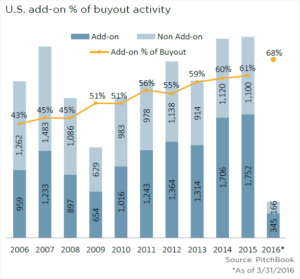
- Economy – Expectations are for a continuation of the recovery that began in 2009. Buyers make acquisitions and pay more when they can reliably forecast future earnings growth.
- Strong public stock market – Public companies with high valuations enjoy a lower cost of capital with which to make acquisitions, and many are on a buying spree.
- Abundant cash – Corporations have strong balance sheets and private equity groups have cash to deploy. They are competing for acquisitions.
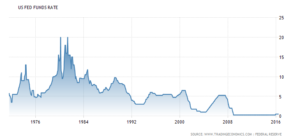
- Debt financing – Debt is used in most acquisitions. Commercial banks are lending, debt ratios have returned to pre-recession levels, and even though the Fed may raise interest rates this month, rates are should remain attractive.
- Valuation multiples – Multiple studies and databases confirm that private company earnings multiples are at pre-recession levels.
- Moderate tax rates – Individual capital gains tax rates are still only 20% compared to 28-35% for most of the past 50 years. Government spending is at all-time highs and a recent budget deal removed the Federal debt limit. Sellers can expect higher taxes in the future.
- more buyers looking at each deal,
- multiple offers per deal,
- more offers in the upper valuation range,
- higher percentage in cash,
- more seller-friendly terms,
- shorter time-on-market, and
- buyers that did not win these deals hounding us for more opportunities.
Defending Your Price
A critical component in any business transaction, whether it be a simple sale of a used car or a complex transfer of ownership of a business, is usually PRICE. The art of “the deal” is dependent upon the two parties arriving at a price they can both live with. In both cases, each party must persuasively defend their price.- The nature of the owner’s involvement. Can the owner easily be replaced or is the business a “one trick pony”? In cases where the owner IS the business, the indispensability will negatively influence the future performance of business and the fair market price. The same holds true for the staff that may or may not be transferring with the change of ownership. Are there certain key employees that would be a challenge to replace?
- Consistency of Performance. Does the business have consistent monthly revenue and cost margins or are there seasonal peaks and valleys where negative cash flows obligate the owner to take on large lines of credit?
- Processes in Place. Does the business have a time tested modus operandi that can easily transfer to a new owner and staff? Intuitive management and loose organization may have served the present owner well but it doesn’t transfer well.
- Client and Supplier Concentration. Limited sources of supply or a small client base can be problematical. When you have all of your eggs in one or two baskets, you really have to watch those baskets.
- Capital Expenditures. Businesses that generate a lot of revenue and profits with minimal capital assets requirements sell for higher multiples. Conversely, businesses that have consistently high outlays for new equipment, rolling stock, and other capital assets, sell for lower multiples. Take a close look at the depreciation schedules to determine the future ‘life expectancy” of the assets and the costs to replace them.
- Regulations. Businesses that require new licensing, background checks, certifications, prior industry experience can present a hurdle to a new owner.
Where’s the Seller Tsunami?
The Wall Street Journal published an article this month titled “The Missing Boom in Small-Business Sales — An expected rush in sales of small firms by the baby boomer generation has yet to materialize.”- The recent recession hit retirement asset values hard, causing many owners to invest additional personal funds in their businesses; therefore postponing retirement for those who plan to live off of their assets in retirement
- People are living longer and enjoy the challenge of working later in life
- Younger people seem to be less interested in taking over the family business (particularly when good jobs are plentiful)
The Significance of Disclosure in a Business Transaction
- Business Conditions
- Regulations
- Other Considerations
- General
SBA Loans: Capital for Small Business Acquisitions
- Loan-to-value ratio is typically 70-85% of the business purchase price.
- Term is typically 10 years.
- Interest rates are typically Prime rate plus 2.0-2.75%. Prime as of this writing is 3.25%, so interest rates are currently 5.25% to 6%. Interest typically adjusts quarterly.
- Banks may loan up to $5 million under the 7(a) program.
- Terms are competitive among banks and vary with perceived business risk and the creditworthiness, outside collateral and business experience of the borrower.
- Loans over $250,000 (and smaller loans when the business is being transferred between related parties) require a fair market value appraisal by a certified business valuation expert.
- To help offset risk, banks typically like to see a 4 times debt-equity ratio (80% debt; 20%cash [equity]) to the appraised value of the business, because if the business is priced at fair market value it should have the ability to service the SBA debt payments. If the buyer is paying more than appraised value, the loan amount will be reduced accordingly.
- Loan-to-value ratios are typically 90% for general purpose properties like office and warehouse buildings, and 85% for specialized/dedicated properties such as restaurants, bowling alleys and gas stations.
- Two loans are actually made: a 50% First Trust Deed held by the bank with a term of 20 to 25-years and a fixed or variable interest rate (currently around 5%), and a Second Trust Deed from the SBA with a 20-year term and a fixed rate (currently 4.9%).
- Although rare, SBA 504 loans can also be used to purchase equipment such as printing presses, tractors, or machining equipment.
Bob Altieri, Certified Business Appraiser (CBA), regularly conducts business valuations for SBA business acquisition loans and serves lenders throughout California. For further information on this topic call or Email Bob Altieri in our Roseville, California office.