Preparing to sell? Why clean financial records are important.

Most business owners don’t like to spend any more time on financial statements than they have to. Trust me, I was one of them!  But, when it comes time to prepare a business for a potential sale, owners need to get serious because having clean financial records is one of the most important factors in concluding a successful business sale or merger.

What do I mean by clean financial statements?

First, all relevant business transactions are recorded in a well organized chart of accounts. You should be able to present an accurate P&L and Balance Sheet for each accounting period. Most buyers will want to look back three to five years. Of course you should have followed accepted accounting methods and have applied those practices consistently over several years. Not doing so makes it harder to compare your company to its industry peers. Also, the recorded transactions should clearly reflect what is going on in your business because prospective buyers use financial statements to study how a business is managed and spot opportunities to improve operations under their ownership.

Another part of what makes financials “clean” is not having an excessive amount of commingled personal expenses, assets and liabilities on the books. When preparing your business for sale, an M&A Advisor will review your financials with you and help identify expenses, such as personal auto expenses or other owner benefits, that might be adjusted back into the net profit of the business when it is presented to potential buyers.

Think of your financial records as a window into the quality of your business overall. Presenting clear, well organized financials to buyers makes a good impression of your business. Financials that are disorganized or hard to follow give buyers the impression that there are other problems in the business, which detracts from receiving maximum value, or, even worse, causes them to walk away.

While potential buyers may be attracted to your business initially based on its top line, industry or business model, they quickly move to the important task of evaluating the details. And more often than not, that process starts with analyzing the past several years of financial statements.

You will have more buyers and can make the process of selling your business much easier by having clean financial records. If you are considering selling in the next 3-5 years and are not certain that your financials qualify as “clean”, give us a call. Or, ask your CPA to give you their objective feedback, from a buyer, buyer’s CPA, investor and lender perspective.

Mark Soeth is an M&A Advisor with Exit Strategies Group’s Roseville California office.

Is Private Equity the Right Solution for Your Exit?

Is Private Equity the Right Solution for Your Exit? Private Equity Groups (PEGs) are disciplined buyers of lower middle-market companies. Most have cash funds and lender relationships in place for the right acquisition opportunities. PEGs often recapitalize a company, where they purchase a majority or minority interest. They bring growth capital and business acumen to […]

Six Reasons NOT to Skim

Pulling unreported cash receipts out of a business is indefensible and unwise under any circumstances, but particularly if the owner expects to exit in the next 3-5 years.

All of us during our childhood were offered the parental edict: “Don’t do it, you are only hurting yourself.” So “why”, you may ask . . . now that you are a grown adult, “should I not skim?”

Many reasons immediately come to mind and I am certain that we could all come up with many more, but in the interests of brevity, I’ll keep it to six reasons.

  1. Skimming is against the law. Tax evasion is a felony.
  2. Management of your business becomes more challenging. Skimming requires you to underreport revenues which means your cost of sales percentage rises. Cost containment and inventory control are more difficult to assess.
  3. Loss of Employee, Partner and Spousal Trust. You set a bad example and create a fertile ground for others to steal. Worse yet, a disgruntled employee or retaliatory ex-spouse or partner could report you.
  4. Bank Loans are difficult to secure, for you and potential buyers.
  5. The value of your business declines.
  6. The marketabilty of your Business is severely compromised. You cannot expect potential buyers to trust you, let alone make a “leap of faith” and pay a premium for your business on the merits of unreported, unverifiable income.

Hopefully this doesn’t apply to you. But, if it does, what’s the solution? I refer you back to your childhood: Don’t Do It.

  1. Stop Skimming
  2. Clean up your books.
  3. Effectively manage your business, using reliable financial records.
  4. Redeem your credibility with your staff, your partners and your bank.
  5. Add value to your business as an ongoing entity or as a potential sale. The amount you no longer skim can easily be worth 2 – 5 times its selling value, or more, depending on the degree of skimming and the size and nature of your business.

In summary, each of us at some point makes a life defining decision … “Do I want to eat better or sleep better?”  You make the call.  As it relates to preparing a business to sell, you can do both.

Don Ross is a seasoned business broker with Exit Strategies Group. He can be reached at 707-778-0210 or donross@exitstrategiesgroup.com. 

Buy Low, Sell High

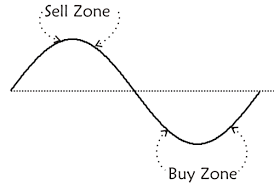
Timing is everything. Almost everyone is familiar with the world’s greatest tip to stock investors, “buy low, sell high.” These simple words of wisdom are equally useful to private business owners; however, sage advice is not always easy to follow in the same moment you’re reaping the benefits of high profitability.

With the current bull market in its eighth year, the lower middle market is economically healthy across many industries. I talk to business owners and CEOs every week. By and large, they are experiencing year over year increases in revenues and profitability – and therefore, exit strategy is one of the last things on their mind.

Selling in an upbeat, healthy economic climate makes sense; at the cost of incremental short-term profits – which are effectively turned over to the acquiring buyer. However, it’s difficult to gauge just how long the bull market will last. A rising tide surely lifts all boats; but it’s wise to consider that tides go in both directions.

There are many factors at play, when contemplating the best time to sell your business. As M&A intermediaries, we see first hand that buyers pay higher valuations for companies that show rising revenue and profits over several years, and when it is reasonable to expect continued growth in the years ahead. And likewise, buyers pay less for companies when the inverse is true.

While many aspects of your business are unpredictable, certain things can be predicted with fairly good accuracy; for example, the movement of tides, and the usefulness of simple stock advice. Buy low, sell high.

Goethe on Exit Planning

Early this morning at my Rotary meeting I heard a quote that struck a chord with me. Our speaker, Stephan Stubbins, recounted the story of how he co-founded a successful theater company that helped save one of our local state parks. Once Stephan and his partners quit their jobs and fully committed themselves to starting a theater company, things started to happen for them.

The quote he shared is by Johann Wolfgang von Goethe ( 1749 – 1832) the prolific German writer, scientist and statesman …

“Until one is committed, there is hesitancy, the chance to draw back, always ineffectiveness. Concerning all acts of initiative and creation, there is one elementary truth the ignorance of which kills countless ideas and splendid plans: that the moment one definitely commits oneself, then providence moves too.

All sorts of things occur to help one that would never otherwise have occurred. A whole stream of events issues from the decision, raising in one’s favour all manner of unforeseen incidents, meetings and material assistance which no man could have dreamed would have come his way.

Whatever you can do or dream you can, begin it. Boldness has genius, power and magic in it. Begin it now.”

We’ve all seen how the act of truly committing one’s self to an idea or goal, sets events into motion, some planned and some fortuitous. Committing to an exit plan works that way too.

Thanks for the reminder Stephan! Click here for information on Transcendence Theater Company

Which Business Valuation Will Facilitate Negotiation?

You are getting ready to sell your business so you must ask yourself some questions:  When do I want to exit?  Who are the most likely buyers?  Is my business adequately prepared to sell?  How does it compare to other like businesses?  And of course, what’s my business worth?

All business valuation relies on some prediction of the future. Business appraisers apply a variety of adjustments to financial statements, theoretical constructs and historical data to divine the future. Numerous valuation approaches and methods are used, but the most common valuation formula is quite simple:

Value = Expected Cash Flow / Risk Adjusted Expected Return

Private equity firms often bypass valuation theory and use their judgment to apply a multiple on adjusted EBITDA (a common but incomplete proxy for cash flow) after scrubbing the financials and gaining a basic understanding of the business.

Likewise, buy-sell agreements often call for a specific price formulas. The advantage in this method is that it’s easy to understand and appears to be a cost-effective way to value a business.

Simplicity is a good thing, except when it conceals or misses important information. For example, let’s say your industry has businesses that have sold between 3-6x EBITDA. How can you understand where your company deserves to be within that range? Not knowing can be costly — either in terms of not getting a deal done because you held out for 8x EBITDA, or because you sold for 3x, when you could have received 5 or 6x.  Improper valuation can easily result in hundreds of thousands or millions of dollars of lost opportunity.

A buyer seeks a reasonable return on their investment, without excess risk. Your task as a seller is to persuade buyers that the cash flow they see will adequately compensate them for the risk of the business. Without a clear understanding the various cash flow adjustments and factors that determine risk, and how that translates to market value, you enter the negotiation unprepared.

A business valuation performed by an experienced professional makes good and common sense. It will help you make better decisions when considering your various exit options.

Make No Mistake: The IRS is Serious About Qualified Appraisals and Appraisers

The IRS and the Tax Courts are serious about requiring taxpayers to properly determine the value of non-cash estate assets, gifts and charitable contributions. To avoid having the value of an inherited, gifted or donated privately-held business interest challenged or rejected by the IRS, obtain a qualified business appraisal (valuation) from a qualified business appraiser.
The IRS defines a qualified appraisal as one that:
  1. is performed in accordance with generally accepted appraisal standards;
  2. meets the relevant requirements of IRC Regulations section 1.170A-13(c)(3) and Notice 2006-96, 2006-46 I.R.B. 902;
  3. does not involve an appraisal fee based on a percentage of the appraised value of the property;
  4. includes specific information, such as a property description, terms of the sale agreement, appraiser identification information, date of valuation and valuation methods employed, among other requirements;
  5. in the case of a charitable donation, is made not earlier than 60 days before the property is donated, and in the case of gifted property is as of the date of gift; and
  6. is conducted, prepared, signed, and dated by a “qualified appraiser.” (see below)
Their definition of a qualified appraiser is an individual who:
  1. Has earned an appraisal designation from a recognized professional appraisal organization (such as the ASA, NACVA, IBA, or AICPA) or has met certain minimum education and experience requirements;
  2. Regularly prepares appraisals for which the individual is paid;
  3. Demonstrates verifiable education and experience in valuing the type of property being appraised;
  4. Has not been prohibited from practicing before the IRS under section 330(c) of Title 31 of the United States Code at any time during the three-year period ending on the date of the appraisal; and
  5. Is not an excluded individual (mainly, someone who is the donor or recipient of the property).

In-depth information on determining the fair market value of donated property can be found here, in IRS Publication 561 (Form 8283).  https://www.irs.gov/uac/about-publication-561

Taxpayers and tax practitioners need to pay very close attention to the credentials and experience of the business appraiser they hire, and be sure that the type of analysis and report that the appraiser intends to provide will fully comply with IRS requirements. When you need a business valuation or appraisal for a tax filing, Exit Strategies’ experienced valuation professionals would be happy to help. To discuss your particular business interest and valuation needs with a qualified expert, you can reach Al Statz, ASA, CBA, at 707-781-8580.

Is 2017 a good year to sell my company?

Sellers often ask us if it is a good time to sell their business. My response is usually, “yes, but it depends”.  The optimum time to sell a particular business depends on many factors, and this article discusses some of them.

First of all, timing depends on the company:

  • How are its business fundamentals?
  • Is it growing? Flat? Shrinking?
  • Is it profitable? How is the quality of earnings?
  • What is the outlook for the business for the next 5 years?
  • Does the company have a good management team in place if the owner leaves?
  • Does the company have intellectual property? Is it robust? Is it protected?
  • Does the company have concentration risk? Customer, supplier, etc.?
  • How many family members does the company employ?
  • How many personal expenses does the owner run through the business?
  • Is working capital being optimized?

The state of the industry is important too:

  • How are industry fundamentals?
  • Is the industry growing? Flat? Shrinking?
  • Are there industry buyers?
  • Is the industry consolidating?
  • Are there any trends or changes on the horizon that could have an impact (good or bad) on your company?

The economy also matters, and market conditions factor in. When the world, U.S., state or local economy stalls, it can be difficult to sell businesses, at any price. Economic factors include:

  • Is the economy growing? Flat? Shrinking?
  • Is the economy stable? Any risks looming?
  • What is going on with interest rates?
  • What is the status of the Mergers and Acquisitions (M&A) market? Are strategic buyers and Private Equity Groups (PEGs) active or sitting on their wallets?
  • Are lenders lending?
  • At the low end of the market, are individual buyers buying? This may be contra-cyclical. In good times, individuals may not want to leave lucrative jobs. On the flip side, when people lose their jobs, some decide to buy a small business.

Last, but not least, your situation as the owner has a major influence on sale timing:

  • Why sell? Retirement? Illness? Death? Divorce? Burnout? Generally its best to have a good reason.
  • What are you planning to do post-sale?
  • If the business sells at its probable selling price, will you have the funds to support those plans, after taxes? Will you need all cash, or can your provide some seller financing?
  • Are you interested in retaining a stake in the company for investment?
  • Do you have family or management that want or expect to take over the business? Are you willing to leave some money on the table (vs. a strategic sale)?
  • How do you want to be involved with the company after the sale? Is there a time by which you have to be completely out?
  • How important to you are the ongoing success of the company, continued employment of staff, customer or supplier continuity, etc., versus maximizing proceeds?

There are more questions, but this is a good start. The point is, deciding when to sell a business is complex and deserves thoughtful analysis. Some of the answers will be easy, others require more analysis and assistance.

So, is 2017 a good year to sell?

For the first time in a long time, most small-to-medium-sized businesses can look back and see five solid years of financial performance. And, importantly, owners and investors can look forward with an expectation of good years to come. It has taken almost a decade, but most companies have completely shaken off the effects of the Great Recession. Furthermore, in most industries, strategic acquirers, private equity groups and lenders are writing checks and valuations are strong.

So, fundamentally, YES, 2017 is a very good year to sell, in the U.S., in California and in the Bay Area, and in nearly all industriesOf course, the full answer depends upon your specific company and personal circumstances.

Contact Roy Martinez with an immediate need or for further information on exit strategies and the market for your business.


Do investment bankers, M&A advisors and business brokers actually add value? If so, how?

Financially savvy company owners, such as private equity groups and diversified public companies, clearly see the value that M&A advisors add, since virtually all of them hire one to run a professional sale process when selling a company in their portfolio — even when they know who the buyers are and which one is likely will pay the highest price.

On the other hand, most entrepreneurs only sell their company once. As a first time seller, they haven’t experienced the value that a capable M&A advisor adds, which puts them at a disadvantage. Fortunately a survey of business sellers by Fairfield University professor Dr. Michael McDonald¹ provides credible evidence that intermediaries add value and explains how. I’ve summarized some of the survey’s findings here.

Professor McDonald surveyed 85 business owners located across the U.S. who sold their companies with the help of investment bankers² for between $10 million and $250 million during the 2011 to 2016 period.

All 85 sellers answered YES to the question of whether their investment banker added value.  As to where they added value, McDonald asked the owners to rate the value and relative importance of 8 services that such intermediaries provide:

  1. Identifying and finding the buyer
  2. Managing the M&A process and strategy
  3. Adding credibility to the seller
  4. Enabling management to focus on running the company during the sale process
  5. Educating and coaching the owners
  6. Negotiating the transaction
  7. Preparing the company for sale
  8. Structuring the transaction

All eight of these services added value according to the owners surveyed.  They said the most valuable services were, “managing the M&A process & strategy”, “structuring the transaction”, and “educating and coaching the owner”.

Importantly, the least valuable service was “identifying and finding the buyer”.  Simply introducing a buyer to a seller is not the primary value that intermediaries bring to the table (though clearly that is still a valuable part of the M&A process).

While this survey focused on $10-250 million deals, its findings hold true for smaller companies as well. If anything, the value that an experienced intermediary brings to owners of smaller businesses is even greater. These owners usually have even fewer internal resources to draw upon and are even more consumed with running their companies than their middle-market counterparts. Partnering with a quality business broker makes even more sense.

¹ I’m using the terms investment banker, M&A advisor, business broker, deal maker and transaction intermediary more or less interchangeably here. Firms that handle only $25 million plus deals usually refer to themselves as investment banks. Firms that mostly sell main street businesses for under $2 million usually call themselves business brokers.  Exit Strategies mostly operates in the $2-50 million price range, and we’ve settled on calling ourselves M&A advisors. Some firms like ours prefer the term “boutique investment bank”, particularly if they serve a few niche industries. When hiring an intermediary, regardless of what they call themselves, it is important to have a good understanding of their knowledge and experience, and the level of service they provide.

² Download the full survey results: The_Value_of_Middle_Market_Investment_Bankers


For more information on Exit Strategies’ full-service sell-side M&A services or to discuss a current need, confidentially, you can reach Al Statz in our Sonoma County California office at 707-781-8580 or alstatz@exitstrategiesgroup.com.

Increase Business Value with Recurring Revenue

Businesses with a higher percentage of recurring revenue generally sell for higher prices. Recurring revenue business models are highly sought after by strategic and private equity buyers because they are perceived as less risky. Future revenue is more predictable and requires less ongoing sales effort and reinvestment.

Companies like Salesforce.com pioneered recurring revenue in the software world, creating the Software as a Service (or SaaS) model. SaaS turned the traditional software licensing model on its head. Not surprisingly, acquirers of software companies reward sellers who’ve built a low-risk subscription model that looks to them like an annuity stream.

Companies in all industries can increase value with a recurring revenue model. Property management companies sell for more than real estate brokerages, for example, because they have long-term management agreements with landlords and leases with tenants that produce steady monthly revenue. Staffing companies, which place temporary workers with employers and produce annuity-like monthly revenue, sell for more than project based recruiting firms. Distributors who sell primarily proprietary products to OEMs sell for higher multiples than distributors who primarily sell commodities to end-users because high switching costs make customer relationships last much longer.

What percentage of your company’s revenue is recurring? 

Almost any business can find at least one recurring revenue opportunity. A license-based software company for example can add an annual support  program. Almost every boutique wineries has a wine club that automatically ships wines to customers on a monthly or quarterly basis. Restaurants can create loyalty programs that encourage customers to return on a regular basis.

Whether you are planning to exit soon or years from now, we encourage you to consider the immediate cash flow and future valuation benefit of recurring revenue.

Contact us for more information on increasing the predictability of your business revenue to increase enterprise value.