Will appear on Seller pages – RECENT SELLER ARTICLES

8 Situations in Which Setting an Asking Price for Your Business Makes Sense

As M&A advisors, our objective in most sale processes involving a privately held lower middle market business is to help our client obtain the best price and terms available in the marketplace. In many of our sale engagements, we go to market without an asking price and use a broad or targeted auction format to elicit the best price and terms from multiple suitors.

When buyers feel competitive pressure, they are more likely to make their best offers in each round of bids. If a buyer doesn’t step up in a bid round, they risk being dropped from the process and losing out on the acquisition opportunity. Often, especially when strategic buyers are present, one or more buyers will place a significantly higher value on the business, sometimes a much higher value.

When should a seller consider setting an asking price for a business?

  1. When selling a smaller main street business. Buyers of these businesses are usually inexperienced financial buyers who need pricing guidance.
  2. When a seller is motivated to get a deal done quickly and is prepared to accept the first bonafide offer at a certain minimum price. Perhaps a seller has a health issue and needs to sell quickly.
  3. When similar businesses have been trading within in a narrow valuation range and the probability of obtaining a strategic premium is low. For instance, accounting firms trade in a fairly narrow range.
  4. When selling an asset intensive business having its primary value in the underlying tangible assets like inventory, vehicles, machinery and real estate. Hotels and wineries with marginal cash flows are good examples.
  5. When there are no interested buyers at the present time and the business will be advertised on several business for sale websites.
  6. When selling to management, employees, family or other related parties. Best practice is generally to present a price at Fair Market Value as determined by an independent business valuation.
  7. When the business is so unique that bidders need pricing guidance.
  8. When required to set a price for regulatory or legal reasons.

Pricing strategy is just one of the many services our team of seasoned M&A advisors provide during a business sale engagement. Optimizing client outcomes is the result of many things done right.

Al Statz is the founder and CEO of Northern California based M&A brokerage and business valuation firm Exit Strategies Group, Inc. For further information on this topic or to discuss a current M&A or valuation need, Al can be reached at 707-781-8580 or alstatz@exitstrategiesgroup.com.

Exit Strategies Advises Vege-Kurl on Sale to Private Equity group

Exit Strategies Group is pleased to announce that its client Vege-Kurl, Inc., a manufacturer of high-quality personal care products, has been acquired by private equity group Hemingway Capital.

Founded in 1959, Vege-Kurl Inc. and its subsidiary Joar Labs is a private label contract manufacturing partner and formulator of high quality organically certified efficacious cosmetic, cosmeceutical, health & beauty, and household products. The company provides a wide variety of products such as shampoos, conditioners, hairsprays, serums, permanent waves and relaxers. Vege Labs specializes in skincare treatments, creams and lotions, alcohol-based products such as colognes and fragrances, plus spa and esthetics products and botanical extracts. It has an inhouse FDA approved R&D OTC Laboratory.

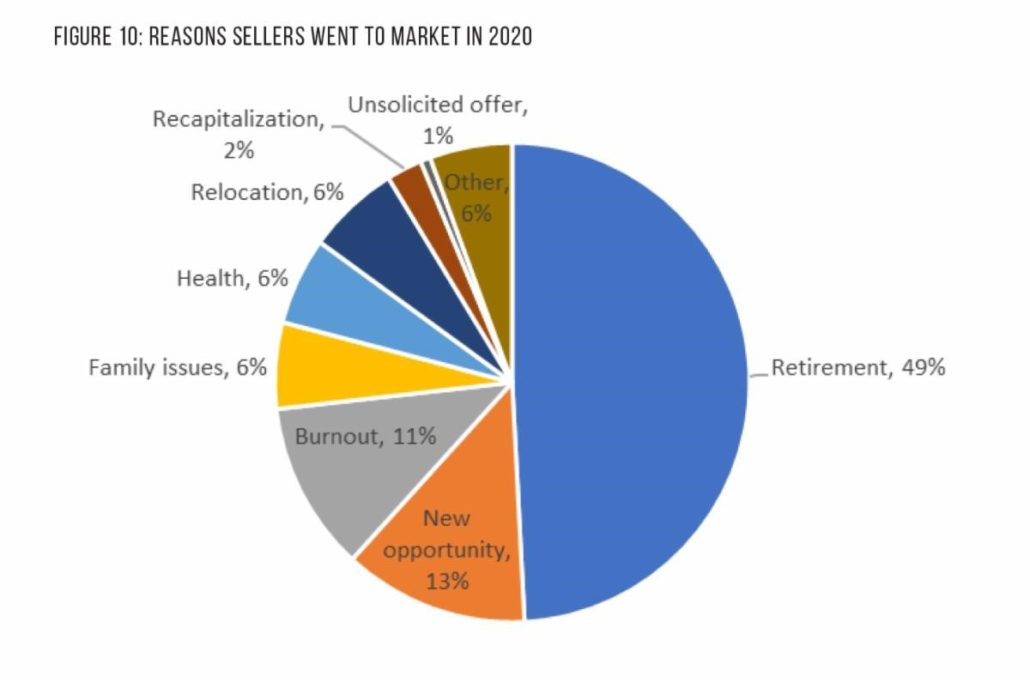
“After decades in the business, owners/executives Eric Huffman and Joe Desens wanted a path to retirement and to find a new owner that was capable of building on their legacy and providing rewarding careers for their loyal and dedicated staff,” said Bob Altieri who led this engagement for Exit Strategies Group.

Exit Strategies represented Eric and Joe through all phases of the sale process, from pre-market assessment and sale planning, to deal book preparation, target buyer identification, confidential outreach and marketing, obtaining bids, negotiation, due diligence and closing. We secured several good offers for our client and Hemingway Capital ultimately provided the right combination of price, terms, capital and business plans.

Hemingway Capital teamed with a seasoned industry executive to take over the CEO role. CVF Capital Partners provided financing acquisition and expansion capital.

If you would like more information about Exit Strategies Group’s M&A advisory or business valuation services, contact Bob Altieri at boba@exitstrategiesgroup.com. Deal terms will not be disclosed.

M&A ADVISOR TIP: What happens to employees after I sell?

Business owners often come to us concerned about employee jobs and retention issues after a sale. They worry that selling their business will lead to job losses if certain positions become redundant.

However, buyers today are often just as focused on retention issues. Your experienced talent can be a key driver of enterprise value, and buyers want to make sure these people stick around.

Your management team is the highest priority retention target, and deal structures will often involve some sort of retention bonuses or shareholder equity options for top leadership. Many buyers, particularly private equity, will consider management retention incentives a routine component of the deal.

While the remaining employee group is less likely to receive financial incentives, buyers ARE looking at culture, communication, and change management. Today, HR is more likely to be involved early in the process in an effort to help the organizations blend culture rather than impose new corporate will.

For advice on human resource issues in business sales, mergers and acquisitions, contact Al Statz in Exit Strategies Group’s Sonoma County California office at 707-781-8580 or alstatz@exitstrategiesgroup.com.


Exit Strategies Group is a partner of Cornerstone International Alliance.


March 2021 – Now may be the time to sell your business

It typically takes 6-12 months (or more) to sell a business. So… if you want to sell your business in 2021, you really need to start now.

Selling a business has many steps:

1. Assess the business to establish probable selling price and validate your decision to sell
2. Create a plan
3. Build a business sale team – intermediary (Exit Strategies), attorney, CPA, others
4. Develop market materials – NDA, Executive Summary, CIM (confidential information memorandum)
5. Build a buyer prospect (BPro) target list
6. Outbound outreach to targeted buyer prospects
7. Business for sale website advertisement
8. Buyer prospect management and qualification (lead → prospect → qualified BPro → Offer)
9. Facility visits and buyer-seller meetings
10. Offers
11. APA – asset purchase agreement
12. Financing
13. Due Diligence
14. Escrow
15. Close

Exit Strategies’ role is to quarterback the seller team through this process – the entire process, from start to finish.

Right now many business owners are sitting on the sidelines (not selling). They are waiting to see what happens as the COVID-19 pandemic winds down. There may be a flood of seller interest starting in Q3 or Q4 of this year. If you want help selling your business, we encourage you to start soon, before that flood hits.

No time like the present.

Roy Martinez is a business intermediary with Exit Strategies Group, a leading California-based M&A advisory firm with almost two decades of experience selling small-to-medium-sized and lower middle market businesses. Prior to Exit Strategies Roy was VP of Finance at WineDirect where he completed two acquisitions. For further information, or to discuss a potential sale or acquisition, confidentially, contact Roy Martinez at 707-781-8583. This post was adapted from Roy’s response to a question from a Sonoma County small business owner.

M&A Financing During the Pandemic

The pandemic has put lower middle market business sales and acquisitions on somewhat of a roller coaster ride. Deal volume declined sharply in Q2-Q3 and came back strong in Q4. Valuations have remained strong throughout the pandemic, at least for COVID-resistant businesses. Though there was a slight Covid-effect in Q2-3.

In terms of M&A financing, capital structures shifted to slightly more less debt during 2020, before edging back up to pre-pandemic levels in Q4. To compensate, the capital stack was being filled in with more buyer equity and more rollover equity.

Interest rates are still low and banks keep lending, but they have pulled back slightly. Lower middle market deals have typically had senior debt of around 3x EBITDA. According to GF Data, that ratio dipped to 2.7-2.8 in Q2-3 (the lowest level in 5 years) and returned to 3.2 in Q4 2020.

GF Data reported an uptick in buyer equity from 2019 to 2020, from 46.1% to 49.1%. We are still seeing buyers bring more equity to the table than pre-pandemic, and showing more interest in seller rollover equity.

Rollover equity is when a business owner retains a minority stake in the enterprise. For businesses valued between $10 million and $25 million, rollover equity accounted for 13.9% of deal funding in 2020.

At the start of the pandemic most of us were expecting to see more earnouts (contingent consideration) in transactions, but that hasn’t materialize. Because demand for acquisitions remained high during the pandemic, most sellers have been able to avoid earnouts.

If risk and uncertainty subside and interest rates remain low, we should see a return to more typical M&A funding levels in 2021.


For further information on M&A financing, or to discuss a current business sale, acquisition or valuation need, contact Al Statz, 707-781-8580 or alstatz@exitstrategiesgroup.com.


Market Pulse Survey: Still a Seller’s Market

Despite the effects of the pandemic, we continued to experience a seller’s market in the fourth quarter of 2020, for businesses with enterprise values over $2 million.

Presented by IBBA & M&A Source


For further information on M&A market conditions, or to discuss a current business sale, acquisition or valuation need, contact Al Statz, 707-781-8580 or alstatz@exitstrategiesgroup.com.

M&A ADVISOR TIP: Cybersecurity is a Buyer Priority

New research from Datasite reveals that cybersecurity is the #1 cause of buyers withdrawing from a merger or acquisition during due diligence.

Deal makers said about 1 in 10 deals fell through during due diligence. Cybersecurity issues was the cause in 36% of these failed deals, followed by financial weakness, excessive valuation, financial irregularities, and leadership issues.

To ensure that your data security practices will not be a concern for prospective buyers of your company, Exit Strategies Group recommends that you talk to your technology team about potential issues, and consider obtaining a cybersecurity audit from an independent third-party firm. Ask your M&A advisor or CPA for a referral.

Exit Strategies Group is a partner of Cornerstone International Alliance.

Exit Strategies Group Advises on the Sale of Poly Seal Industries

Exit Strategies Group recently advised the owner of Poly Seal Industries on a sale to Goodyear Rubber Company.

Founded in 1974, Poly Seal Industries is a Berkeley, California based manufacturer of molded rubber products for customers in the biopharmaceutical, water & wastewater treatment, chemical, healthcare, food & beverage, and consumer electronics industries. In addition to producing quality custom products, Poly Seal helps customers succeed by providing manufacturing engineering and material science expertise.

Goodyear Rubber Company is a world class custom rubber company with molding, extrusion, mixing and sheeting operations in Southern California and Mexico. They specialize in manufacturing custom elastomer components that facilitate motion. They offer turn-key elastomer solutions, including material formulation and part design as well as both small and large-scale production. This acquisition diversifies end markets for Goodyear and takes advantage of available capacity in its molding operations.

Exit Strategies’ client, Dan Baker, was the owner and full-time president of Poly Seal.  His main objectives were to obtain a good price, retire from the business to spend more time with family, provide an uninterrupted supply of quality products to customers, and retain the real property for future redevelopment.

Detailed planning and execution went into achieving Dan’s objectives. Dozens of carefully selected buyer prospects were identified, contacted and screened, leading to multiple bids. Only buyers that could meet Poly Seal customers’ exacting requirements were considered. A substantial effort was required by the deal team to develop a workable transition plan.

Dan Baker said, “I could not have managed this transaction without Exit Strategies and Roy Martinez. They quarterbacked the deal process from start to finish including deal book preparation, buyer outreach, obtaining bids, negotiations, due diligence, contract, and close.”

Exit Strategies was pleased and honored to deliver a positive outcome for its client and other stakeholders. Roy Martinez and Al Statz led this project for Exit Strategies Group.

Exit Strategies Group is a leading California-based M&A advisory firm with almost two decades of experience selling small-to-medium-sized and lower middle market businesses. Al Statz is the President and Founder of Exit Strategies. He can be reached at 707-781-8580. Roy Martinez has been a business intermediary an certified valuation analyst (CVA) at Exit Strategies for over eight years. Prior to Exit Strategies Roy was VP of Finance at WineDirect where he completed two acquisitions. Roy can be reached at 707-781-8583

Tax changes could accelerate business sales in 2021

To complete deals in 2021, ahead of possible tax changes, owners and deal teams need to act fast.

With the Democrats in the White House and having the tie-breaking vote in the senate, it is likely that taxes on corporations and wealthy individuals will increase during this administration. When and how much are unknown. With COVID recovery as the administration’s immediate priority, many think we will have until 2022.

Biden has proposed raising long-term capital gains tax to 39.6% on income above $1 million, nearly double the current rate. That change would have a major impact on business transfers.

To help understand the impact, I ran some quick numbers … Say a business has $20 million in revenue in 2021 and is growing 5% annually. Assume a consistent 15% EBITDA margin and 6x price/EBITDA multiple at sale. To simplify the math, let’s assume a $0 basis and ignore state taxes and transaction costs.

Option A: The owner sells in 2021.

With EBITDA of $3 million and a 6 multiple, that’s $18 million enterprise value. At the current 20% capital gains rate, the tax liability would be $3.6 million, for net proceeds of $14.4 million.

Option B: The owner holds and grows the business, and sells in 2023.

With 5% annual growth, revenue is now $22 million and EBITDA is $3.3 million. At 6x, that’s an enterprise value of $19.8 million. At a 39.6% capital gains tax rate, the tax liability would be $7.8 million, for net proceeds of $12 million – a significant reduction from $14.4 million.

Under those conditions, a business owner would need to hold and grow the business for six years to yield the same after-tax proceeds.

Yes the owner would receive cash distributions during those years; however, they would also have the risk and headaches of owning the business and would have to delay retirement.

If you are a business owner and are thinking about selling and retiring in the next few years, start talking to your advisors now. It takes 9 months on average to sell a business, and preparing for the sale process can take some time. Work with your financial advisor to understand how much in assets and/or income you need to fund your retirement. Obtain a value and sale readiness assessment from an experienced M&A advisor like Exit Strategies Group. Then have your CPA advise on the current and potential tax burdens now and in the years ahead.


Al Statz is the founder and president of Exit Strategies Group, a leading California based lower middle market M&A advisory and business valuation firm. For further information on this topic or to discuss a potential business sale, merger or acquisition, confidentially, Al can be reached at 707-781-8580 or alstatz@exitstrategiesgroup.com.

M&A Advisor Tip: ESG Diligence on the Rise in M&A

Companies that are able to showcase their Environmental, Social and corporate Governance (ESG) capabilities stand to gain a competitive advantage and make themselves more attractive to potential acquirers.

ESG issues cover a wide range of corporate practices that could include everything from environmental stewardship, health and safety policies, employee well-being, community support, to corporate culture issues.

In recent research from Datasite, 84% of dealmakers rated ESG as an “important/very important” M&A due diligence consideration. And 78% have terminated M&A discussions due to concerns about a target company’s ESG credentials.

We are definitely seeing buyers pay greater attention to environmental, social and corporate governance issues in our sell-side M&A engagements. From a buyer perspective, misalignment in these areas reduces valuation and increases integration challenges and costs. As a result, we are incorporating more ESG analysis into our company valuations and exit planning assessments, and making more of these types of disclosures in our offering memorandums.


For advice on exit planning or selling a business, contact Al Statz in Exit Strategies Group’s Sonoma County California office at 707-781-8580 or alstatz@exitstrategiesgroup.com.  Exit Strategies Group is a partner in the Cornerstone International Alliance.