Will appear on Seller pages – RECENT SELLER ARTICLES

Pros & Cons of Selling Your Company to a Strategic Buyer

When it’s time to sell your business, you will likely have multiple buyer types to choose from. You could receive offers from strategic, financial, and individual buyers.

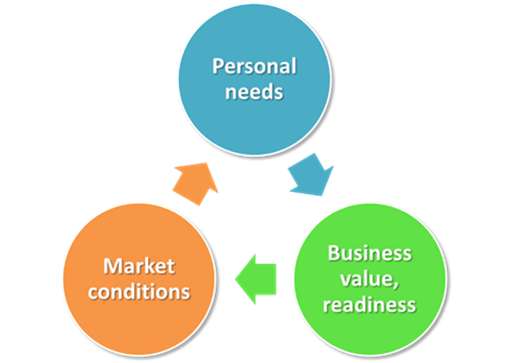
As you start thinking about selling your business, think about what’s most important to you in a sale. Different buyer groups tend to operate by different playbooks. Understanding what each group typically has to offer can help us target the buyers who are the best fit for your business.

A strategic buyer is an existing business that operates in the same industry, or a synergistic industry. Strategic buyers may be a competitor, a client or a vendor to your business. It’s almost just as likely, however, that you will have had no prior business relationship with the strategic companies interested in acquiring your business. Sometimes, you won’t even have heard of them before. A strategic buyer is generally looking at your business as a path to growth with a long-term hold. Your business may represent an opportunity to move into new territory, new product lines or services, new customers or a new distribution channel.

Pros of selling to a strategic buyer

  • Higher value:  Strategic buyers are often willing to pay more than financial buyers. That’s because strategic buyers may be able to realize immediate synergistic financial benefits. Usually though, they won’t pay more unless they have competition at the negotiating table, which is where we come in.
  • Faster exit:  If you are feeling burned out or you’re just anxious to get started on the next chapter of your life, strategic buyers typically enable you to walk away in the shortest time frame. This assumes they already have experienced leaders who know your business and don’t need a long period of transition support.
  • Smoother due diligence:  A strategic buyer already understands your industry and probably has a good grasp on how you do business. That means the due diligence process may go faster. They will still take a close look at your financials and business practices, but they can use their industry knowledge to streamline their analysis and decision making.
  • Easier financing:  A strategic buyer is usually a larger established company with ready access to capital. Financing is less likely to be a hurdle than when selling to an individual or investment group that isn’t already funded or will rely heavily on new debt financing.
  • Better opportunities for employees:  A strategic buyer may be able to offer your employees a richer benefits package and greater opportunities to grow. Large companies can offer new career challenges and advancement opportunities.
  • Advantages for your clients:  Strategic buyers tend to be larger and more developed than the companies they acquire. That means your clients may gain access to a stronger service team, more advanced technology, or a wider breadth of services.

Cons of selling to a strategic buyer

  • Employee reductions:  Buying a business typically affords the acquirer some economies of scale. Unfortunately, that can lead to redundancies in management and administration. Worst case, certain businesses (e.g., small manufacturers) could be acquired by a company that just wants their customer list and has capacity to absorb all their existing work – leading to a total shut down.
  • Legacy:  When selling to a strategic, your name may not stay on the sign out front very long. It’s often just a year or two until your business is fully integrated into the acquiring company.
  • No equity options:  A strategic buyer is typically going to purchase 100% of your business. If you were looking to maintain a minor equity stake and stay on to help the business grow, a strategic buyer is probably not the right one for you. Also, equity opportunities for your key people are usually limited or don’t exist.
  • Culture:  Ideally, you’ll be able to find a buyer with the same work style, values and cultural norms as yours, but don’t expect your company to look and feel the same for very long. Strategic buyers usually look to shift your business practices to their way of doing things.

I should also point out that there are exceptions to every rule. I recently worked on a deal where my seller client selected a strategic buyer over a financial buyer, even though the value was not higher (though we got them to nearly double their initial offer) and the due diligence was not expected to be smoother.

At the end of the day, every business seller has different goals and priorities. There is no best type of buyer – it’s a matter of what’s best for you. The better your advisor understands your personal goals, the better opportunity they have to find a buyer that meets your ideals.

Al Statz is President and founder of Exit Strategies Group, a leading California-based M&A advisory, valuation and exit planning firm with decades of experience. For further information on types of business buyers or to discuss your exit plans, confidentially, contact Al Statz at 707-781-8580.


M&A Advisor Tip: Put on Your Poker Face

Ready to sell?  Talk to your spouse and trusted tax, financial and legal advisors. Beyond that, keep it a secret.

Confidentiality is extremely important in almost any business sale, merger or acquisition. When stakeholders think your business is for sale, it creates dangerous uncertainty. Valuable employees start looking for other jobs, vendors tighten credit terms, and competitors use it as an entry point to poach your customers.

The average business takes 9 to 12 months to sell. If confidentiality is breached early in the process, it can put the company in a downward spiral. Suddenly you’re not only running a business, but you’re busy putting out fires and patching holes in the dam. That will discourage potential buyers. Buyers want to buy a stable and successful operation with the only changes occurring when they are ready to make them.

For further information or to discuss a current business sale, merger or acquisition need, contact Al Statz, 707-781-8580 or alstatz@exitstrategiesgroup.com in our Petaluma, California office.

Private Equity is Open for Business

We stay in regular contact with  private equity groups from around the country to monitor M&A market activity. Currently, the message we are hearing is that these firms are “open for business.”

Private equity firms are in the business of buying, building and selling businesses. It’s how they deliver investor returns. They don’t have time to sit back and wait things out. The clock is ticking as they work to meet investor expectations within fund deadlines.

These firms are pretty good about tracking and studying their deal flow. They have data, going back years, on the volume and quality of potential deals that they see.

What we’re hearing, from multiple private equity firms, is that the number of good, quality companies coming to market is down anywhere from 50 to 80% over a year ago. That means the law of supply and demand is working in sellers’ favor.

We know that some buyers have pulled out of the market. Based on what we and our peers are seeing, I’m estimating that 25% of buyers have left the market. But compared to the number of new sellers who are not going to market, we still have a demand/supply imbalance.

That competition has kept valuations and deal structures strong. Previously, we predicted sellers would be sharing much more of the risk through increased earn outs and other alternative deal arrangements. And we are seeing a bit of that, but not to the degree that we expected 3 to 6 months ago. In fact, according to the latest Market Pulse Report sponsored by IBBA and M&A Source, Q2 median selling prices in the Main Street market came in anywhere from 89 to 92% of benchmark. Meanwhile, lower middle market companies in the $5 million to $50 million range achieved the highest values at 100% of benchmark.

What we’re seeing in M&A is somewhat mirroring a phenomenon in the home buying market right now. Fewer sellers are listing their homes, but buyer demand is still high. According to data from Zillow, new for-sale listings are down about 25% over a year ago but house values are up 4.3% year-over-year.

To clarify, sellers that are faring well in the M&A market are those who have been relatively unaffected by COVID-19 and those who were able to recover quickly. Essential businesses and those who have otherwise remained resilient are still having success in the M&A market.

As one example of the competitive dynamics at play, we recently took a technology distribution business to market and within 45 days had 8 written indications of interest on the table on similar terms to what we would have expected 12 months ago. And deals are getting done. A peer organization of ours in Pennsylvania just sold a company with $4-5 million EBITDA at an eight-multiple (above the 2019 market average) with 80% of cash at close.

So if you’re thinking you have to wait out the market to sell, talk to an M&A advisor before you count yourself out. If you have a quality business, it’s easier to get attention right now. Private equity and corporate buyers have fewer businesses to consider and more time on their hands to evaluate acquisition opportunities.

The right businesses are still selling with strong values and favorable deal structures. The window has not closed for high quality companies; in fact, you may be able to benefit from the current market dynamics.


For further information or to discuss a potential sale, contact Al Statz, 707-781-8580 or alstatz@exitstrategiesgroup.com in our Petaluma, California office.

Assignment for the Benefit of Creditors: Alternative to a Bankruptcy Sale

When the goal of a financially distressed business owner is to sell with minimum publicity, free of unsecured debt and potential liability for directors and management, the most advantageous exit path may be an Assignment for the Benefit of Creditors (ABC). Most buyers won’t acquire the assets of an insolvent entity unless the assets are “cleansed” through an ABC or bankruptcy process. Typically, the board of the troubled entity has decided that a rapid sale is in the best interests of the company and its creditors, and it is aware of a handful of likely strategic buyers. This article briefly explains how an ABC works and its advantages and disadvantages.

How does an Assignment for the Benefit of Creditors work?

In an ABC, the shareholders of a troubled company (the “Assignor”) voluntarily assign the title, custody and control of its assets to an independent third party (“Assignee”) of their choosing who acts as a fiduciary to the creditors of the business.  The Assignee’s role is to similar to that of a bankruptcy trustee. They are responsible for selling the assets of the business and distributing proceeds to creditors. The business may continue to operate and can be sold as a going concern if the Assignee believes that will maximize value to creditors. If creditors are paid in full, any surplus proceeds will go to the shareholders.

Advantages of an Assignment for the Benefit of Creditors

  1. Faster than a bankruptcy process, which preserves business value.
  2. More flexible, efficient and cost-effective than bankruptcy.
  3. Company management can select an Assignee with appropriate experience and expertise.
  4. A sale is less likely to be challenged since the Assignee acts on behalf of creditors.
  5. The business can continue to operate to maximize value.
  6. Not secret, but much quieter than a bankruptcy case.

An ABC often involves an auction sale process, which maximizes sale proceeds and protects buyers. They can even be prepackaged, which means there is a 3-way negotiation between a seller, a proposed assignee, and a buyer or buyers. The ABC happens and is immediately followed by the sale closing.

ABC’s do have some disadvantages. Because, in California at least, the ABC process is nonjudicial, there is no court supervision and no court order, so there is less certainty for buyers. Also, relative to bankruptcy, an ABC requires the cooperation of secured creditors and counterparties to leases and contracts.

This is the fifth in a recent series of articles from Exit Strategies’ senior team with insights on valuing and selling distressed businesses. See Insights.


Al Statz is President and founder of Exit Strategies Group, a leading California-based M&A advisory firm with decades of experience selling companies in all conditions. For further information, or if you are interested in exploring the potential sale or acquisition of a financially troubled business, contact Al Statz at 707-781-8580 to discuss your needs, circumstances and options, confidentially. 

M&A Advisor Tip: COVID-19 Era Due Diligence, Part 4

M&A buyers are still active in the midst of this uncertain business environment. However, they are mindful of added risks caused by COVID-19.

These are some financial questions that are likely to come up in future due diligence in light of COVID-19:

  1. Did the business utilize any government relief, debt deferrals, or rent reductions?
  2. In terms of government relief, was the business accurately entitled to that relief and did they meet requirements for debt forgiveness?
  3. Did the business take on new debt that would impact the viability of an acquisition?
  4. Are revised financial projections reasonable?
  5. What is the financial condition of the business’s key customers?
  6. Are there risks to collecting on accounts receivable?
  7. What is the seller doing, if anything, to reduce or renegotiate operating expenses?

Business owners looking to sell soon should review their current practices now, so they’re prepared to address buyer concerns.

Read our previous posts on coronavirus era M&A due diligence:

For further information or to discuss a current M&A need, contact Al Statz, 707-781-8580 or alstatz@exitstrategiesgroup.com in our Petaluma, California office.

Recapitalization Pros and Cons

When we talk about recapitalization, we’re talking about a partial sale of a company that allows the owner to liquidate some of the value they have in their business. Typically, this involves selling a part of your equity (usually 70-80%) to a third-party, however some business owners do sell just a minority stake.

Recapitalizations are a standard investment tool for private equity firms. They have investor dollars they need to put to work and a timeline in which they’re expected to deliver returns. So they buy businesses with the intent of growing them and/or repackaging them with synergistic businesses for resale approximately 5 to 7 years down the road.

Using this playbook, they generally prefer to buy businesses with an active owner or strong management team in place. You or your existing leadership team will continue to run the business day-to-day while the private equity investor provides resources and assistance to fuel new growth.

Advantages of a Recapitalization

Liquidity: As a business owner, you may have all your financial resources tied up in the business. A partial sale allows you to take some chips off the table, securing your financial future.

Professionalize the business: Recapitalizations can have the effect of increasing management rigor. Your investment partner may help you implement new reporting practices, processes or management software. While these tools help you remain accountable to your new partners, they can also help the business make more informed, data-driven decisions.

And because private equity excels in developing businesses for resale, they understand how to make a business more attractive to buyers and position it for even greater value in a future sale.

A partner for growth: If you see a clear growth opportunity in front of you, but are not prepared to take on new debt or risk at this stage in your life, an investment partner can provide the resources to fuel growth plans.

For example, one business owner in the physical therapy space grew his business from one clinic to 50 over the course of 20 years. After partnering with private equity, the business doubled to 100 locations in just two and a half years.

He got to do what he loved, integrating new clinics, while the investment team focused on acquisitions. When he sells his remaining equity in the business, his minority stake will likely sell for a much larger value than what he received in the initial sale.

Potential disadvantages:

No fast exit: If you are burned out, this is generally not the right approach for you. In a recap model, the investors are typically looking for a business leader who will stay for roughly five years. That doesn’t work if you don’t have any gas left in the tank.

This approach could work, however, if you have a strong management team. Equity can be transitioned to management, creating a new group of minority owners motivated to drive success.

Loss of control: While you will still run the day-to-day business, you will no longer be the primary owner and decision maker. Your investment partner will be involved in all significant financial and strategic decisions.

So before you partner with an investment firm, make sure you feel like your goals align with their intentions. And talk to other business owners they’ve partnered with in the past, to find out how well the relationship worked out.

Pressure to grow: If you’re being recapped late in the life of an investment fund, your investors may need to show returns in just a few years. That could lead to a situation in which you’re pressured to grow quickly.

You could find your investors are more interested in short-term returns than long-term strategic growth. Then again, if your investor is looking to sell quickly, one concentrated push with a faster exit might appeal to you.

At the end of the day, recapitalizations can be a great tool to grow your business and increase your overall value. Finding the right partner takes careful consideration and due diligence. But with the right fit, you can often accomplish more and reap greater rewards than with a traditional full sale.

For further information on recapitalization contact Al Statz at 707-781-8580.

M&A Advisor Tip: COVID-19 Era Due Diligence, Part 3

M&A buyers are still active in the midst of this uncertain business environment. However, they are mindful of added risks caused by COVID-19.

These are some contract-related questions that are likely to come up in future due diligence in light of COVID-19:

  1. Did the business default on any third-party agreements?
  2. What are the termination rights on key contracts?
  3. Are counterparties adhering to their contract obligationss?
  4. Were terms modified or waived in a way that would impact future enforcement, force majeure, or other provisions that would enable termination or suspension of an agreement?
  5. What ongoing challenges and risks will the business face due to non-performance?

Business owners should review their current practices now, so they’re prepared to address buyer concerns.

Read Part 1 and Part 2 of this series on coronavirus era M&A due diligence.

For further information or to discuss a current M&A need, contact Al Statz, 707-781-8580 or alstatz@exitstrategiesgroup.com in our Petaluma, California office.

M&A Advisor Tip: COVID-19 Era Due Diligence, Part 2

M&A buyers are still active in the midst of our uncertain environment. However, they are mindful of added risks caused by COVID-19.

These are some technology-related questions that are likely to come up in future due diligence due to COVID-19:

  1. Do employees have the ability to work remotely – without frustrating workarounds?
  2. Does the IT system have sufficient capacity to support remote operations?
  3. Are further developments necessary to sustain a long-term virtual environment?
  4. Are security measures sufficient in a time of increased scams and attacks?

Business owners looking to sell should review their current practices now, so they’re prepared to address buyer concerns.

For further information or to discuss a current need, contact Al Statz, 707-781-8580 or alstatz@exitstrategiesgroup.com.

M&A Advisor Tip: COVID-19 Era Due Diligence, Part 1

M&A buyers are still active in the midst of uncertainty. However, as you would expect, they are mindful of added risks caused by COVID-19.

Talent-related questions that may come up in future due diligence due to COVID-19:

  1. Did layoffs or other cuts impact the business’s ability to retain key employees?
  2. Did the business comply with state and federal laws related to layoffs and furloughs?
  3. How is employee health and well-being managed?
  4. Are policies and practices sufficient to protect employee safety?
  5. Do employees have the ability to work remotely – without frustrating workarounds?
  6. How well does company culture support engagement and accountability in a remote environment?

For further information on business sales, mergers and acquisitions in the midst of coronavirus or to discuss a current need, contact Al Statz, 707-781-8580 or alstatz@exitstrategiesgroup.com.

Methods of Selling Distressed Businesses

As most companies transition from survival to rebuild mode in the second half of this year, some will become financially distressed and the owners will want to move on. Fortunately, for the shareholders and creditors of these companies, there is an active market for distressed business assets. Distressed businesses can be attractive acquisition targets for strategic buyers, and sellers can optimize financial outcomes through a proactive M&A sale process.

Financial distress is a term in corporate finance used to indicate a condition when promises to creditors of a company are broken or honored with difficulty. If financial distress cannot be relieved, it can lead to bankruptcy. (Source: Wikipedia)

Distressed business sales range from simple out-of-court transfers of a company’s tangible and intangible assets, to highly structured and expensive bankruptcy proceedings.

Four Routes to Selling the Assets of a Financially Distressed Business

  1. Sale of assets (Asset Purchase Agreement), where lenders and certain creditors may be asked to forgive or discount outstanding debts
  2. Secured party short sale under Article 9 of the Uniform Commercial Code
  3. Asset sale in an Assignment for the Benefit of Creditors
  4. Section 363 asset sale in a Chapter 11 or Chapter 7 bankruptcy

Selecting the appropriate method is case-specific and involves a number of considerations, including:  (i) the particular assets involved; (ii) the seller’s runway and the speed of consummating a transaction; (iii) the cost of the process; (iv) privacy concerns; (v) the cooperation of secured creditors and ability or need to sell assets free and clear of liens; (vi) buyer protections afforded; (vii) exposure to subsequent challenges and liability (i.e., fraudulent conveyance or successor liability claims); and (viii) which process will most likely maximize value to shareholders. Choosing the most effective method requires careful analysis of facts and circumstances and understanding of alternatives.

If your company is facing financial distress, the sooner you get help and take action the better. When financial distress is severe and on a path to insolvency, an attorney with specialized expertise in complex workouts, restructurings and bankruptcy must be consulted early on.


Al Statz is President and founder of Exit Strategies Group, a leading California-based M&A advisory firm with decades of experience selling companies in all market conditions. For further information, or if you are interested in exploring the potential sale or acquisition of a distressed business, contact Al Statz at 707-781-8580 to discuss your needs, circumstances and options, confidentially.